Rhymes and Repetitions
Correction: A previous version which was sent out via newsletter repeatedly misidentified Renee Good as "Rachel." I deeply regret the error and have corrected it throughout the piece.
I suppose one of the obligations imposed by writing my personal reflections is ceding a certain amount of editorial control to Clio. We don’t get to choose when or how History intersects with our personal trajectories; when it does, we should pay attention.
The January 7, 2026, murder of Renee Good in South Minneapolis by masked agents of the United States of America and the gaslighting about the evidence available to our own eyes infuriates but no longer shocks me. What did shock me was the cruel doubling down on the trauma of when George Floyd was murdered four and half years ago by Minneapolis police officer Derek Chauvin just a few blocks away, a fact I don’t find coincident.
In the spring of 2021, I spent six weeks at the People’s Way at the intersection of East 38th Street and Chicago Avenue, directly across the street from the spot where a handcuffed George Floyd spent his last 9 minutes and 29 seconds on Earth with Chauvin’s knee on his neck. I had the privilege of sitting and working with the members of this community as they fought to transform the legacy of another unjust street killing by law enforcement into a movement for justice within and beyond their neighborhood. My time there encompassed the conviction of Chauvin on April 20, 2021 and the events to commemorate the one year “angelversary” of Floyd’s passing on May 25. Those six weeks are among the most profound of my life – I think about my experiences in George Floyd Square (GFS) on an almost daily basis, and they’ve shaped how I’ve since approached both my work and my community.
While I’ve shared some of these experiences with people in the past, I've mostly sat with them privately. The past week’s events, however, pushed those weeks in 2021 into the forefront of my mind, and I want to take the opportunity to commit these memories to writing before they grow hazier than they already are. I do feel an intense obligation to get this right, but memory being what it is, I'll simply note that, first, I am speaking only for myself and not for the community within George Floyd Square, and that any errors in this re-telling are my own which I'll correct if needed.
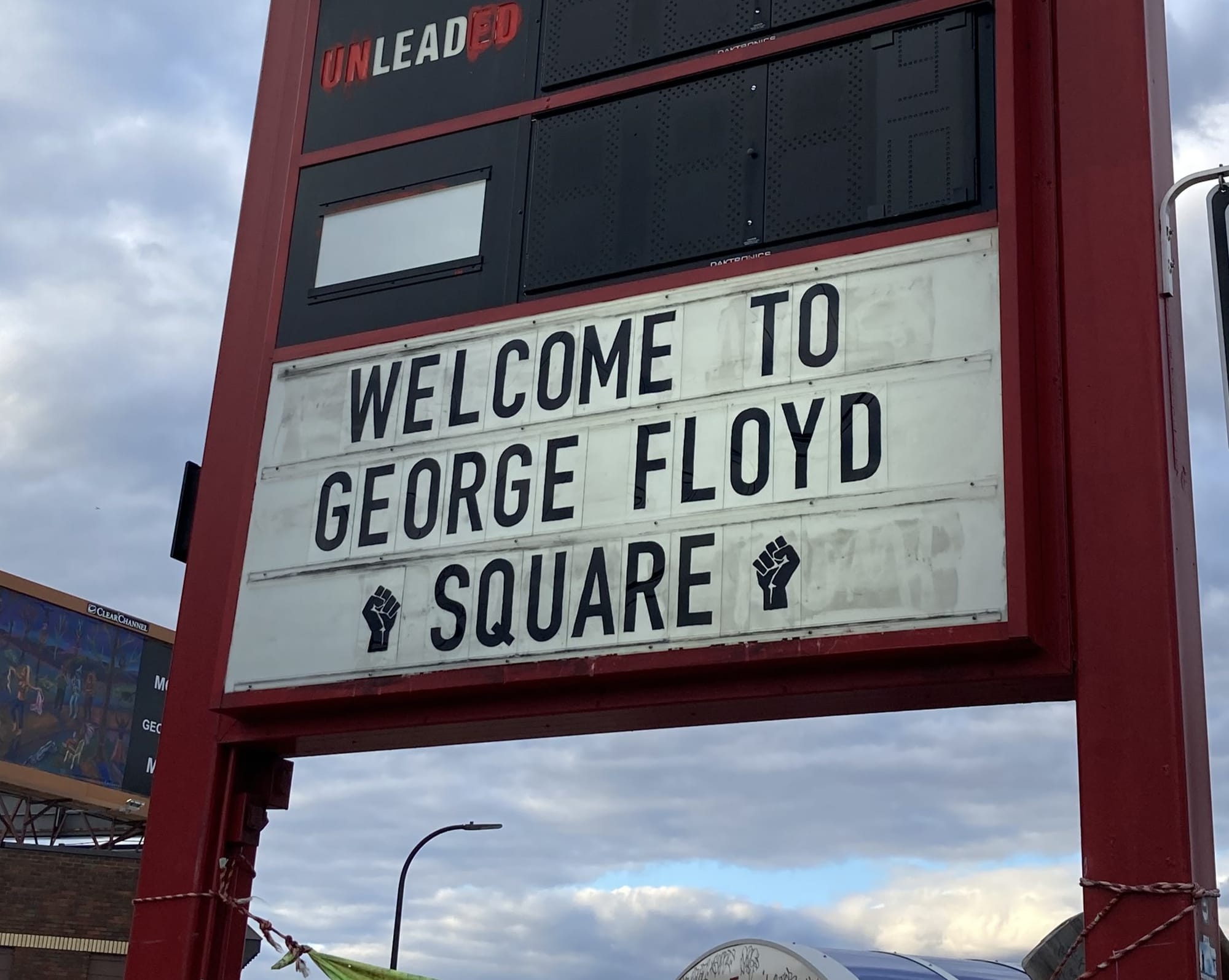
I, among a crew of union staff and members, arrived in the Square at the request of Marcia Howard, a teacher at a nearby high school and a member of our union. She also lives around the corner from 38th and Chicago. It was one of her students who filmed the footage of Floyd’s murder broadcast to the world. That video instantly transformed a funky corner in an under-served neighborhood and business district into History, bringing immediate material consequences to the people who lived and worked there. Marcia and her grieving neighbors organized to protect their homes and businesses in a very literal sense by throwing up barricades to control car traffic into the neighborhood and creating and training community teams to ensure the safety (among so many other essential activities) of what had become an open-air shrine, a 24-7 vigil, a pilgrimage site, and a magnet for provocateurs of all stripes.
The instructions we received prior to arriving in Minnesota were a clarifying “we’re not really sure what we’re going to be doing.” Upon arrival Marcia greeted us with a well-practiced history of the occupation to date, briefed us on what was currently happening in the community, and told us our job was just to help “hold space” with the people in the Square.
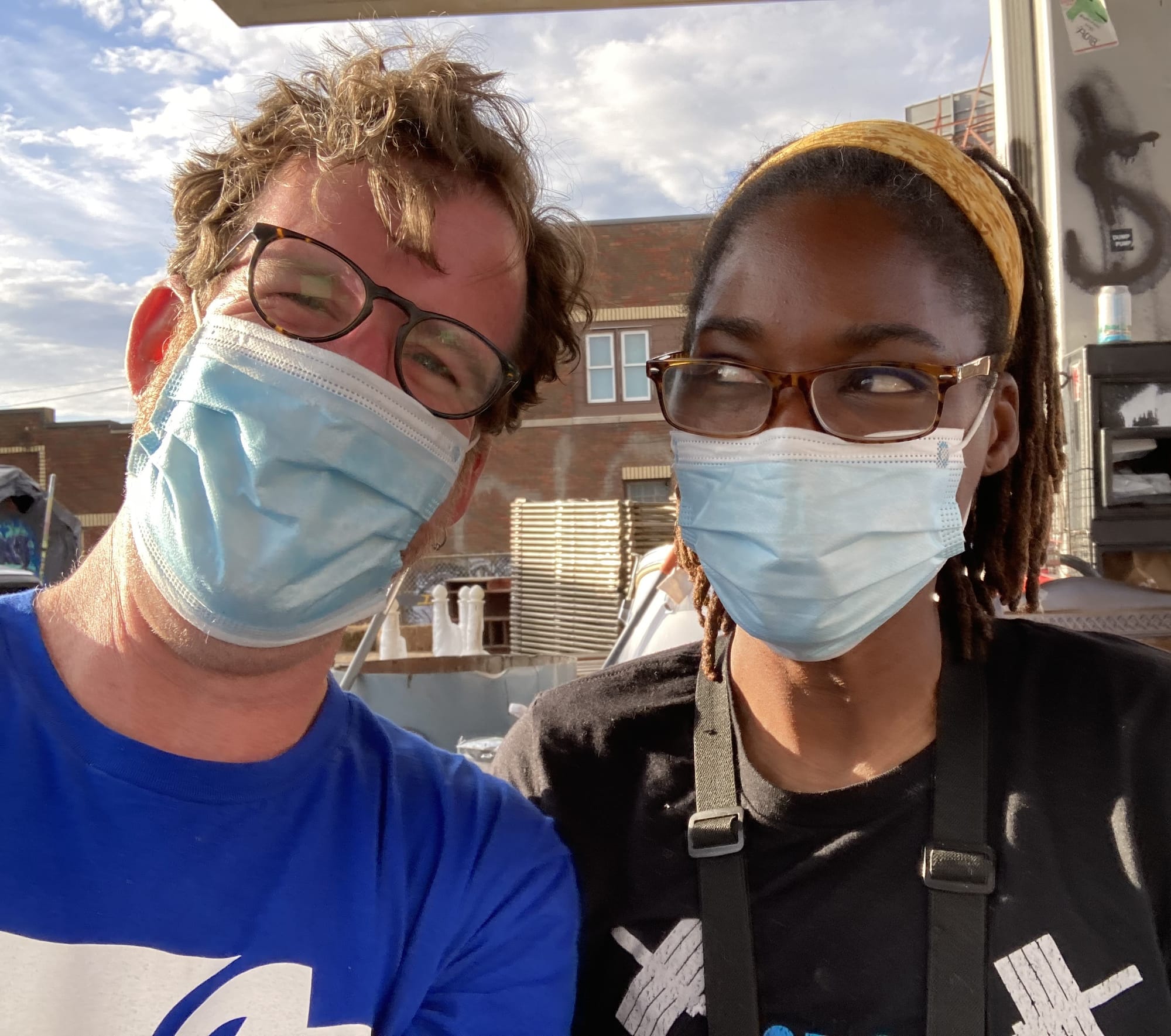
A quick aside – Marcia is central to my story of being there, and she’s also brilliant human being who is charismatic af. I’ve told people she should be mentioned in the same breath as Angela Davis, and I stand by it. But she was one leader among many, several of whom I came to know and love. Marcia also specifically asked me to share the work that she and her neighbors were doing inside the barricades, a form of explicit consent I don’t have from others. I hope the rest of this piece honors these amazing people.
Every day I was there I attended two one-hour community meetings under the shelter at the People’s Way, a Speedway service station that was abandoned in the immediate aftermath of Floyd’s murder and appropriated as a community space. Surreally posted on benches around a fire between decommissioned gas pumps, a rotating cast of neighbors – housed and unhoused – and activists in groups as small as 10 and as large as 70 or 80 gathered at 8 am and 5 pm to disseminate news, raise, discuss, and resolve (or not) neighborhood issues, and prepare for future events. They shared grief, anger, and hope. Everyone was challenged to think deeply about the racism and other systems of oppression that have created the moment we’re in, our complicity with those systems, and the ways that we can destroy those systems while creating new ones that lift people up. They organized to spread news and concerns to all their neighbors to ensure that everyone’s voice is heard. It’s as little-“d” democracy as it gets.
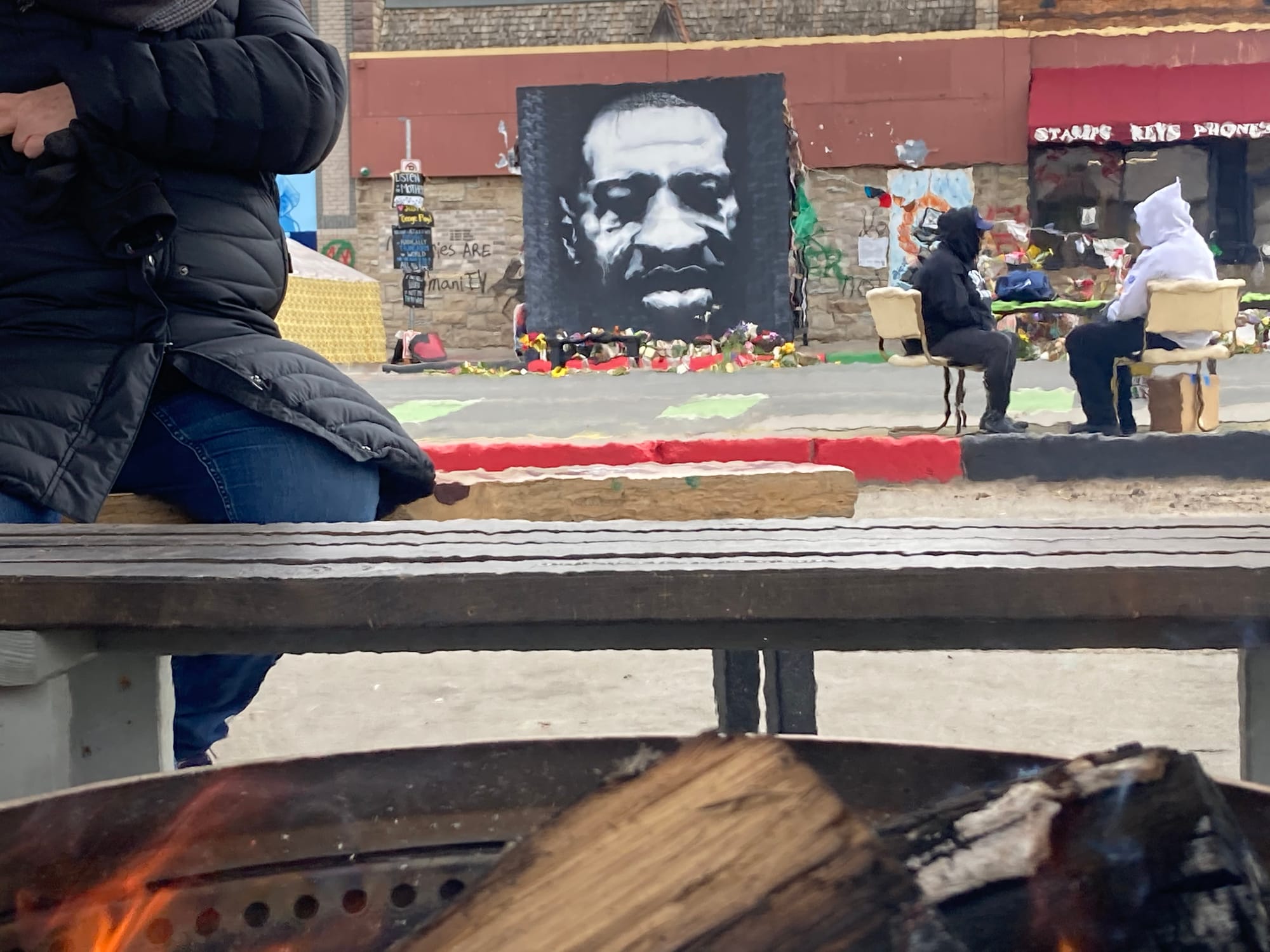
Every meeting began with a recitation of the 4 Rules of George Floyd Square to affirm community norms.
Rule #1: Assume everyone has COVID – mask up or back up.
This rule is very of its time – vaccines had just arrived (I had secured a Johnson & Johnson shot a few days before leaving for Minneapolis) and the erosion of public trust in public health (and in government more generally) that occurred over 2020 was felt in the Square. People did typically wear masks when gathered, but my time there coincided with the early, wary relaxation of pandemic restrictions.
This rule also reflects a commitment to the health of the community reflected in the health infrastructure created by residents in a neighborhood where there’s not good geographic and/or economic access to health services and many are distrustful and fearful of calling for emergency services. There was a network of people on-site locating open vaccine appointments wherever they were available in the metro area, scheduling people in the square for a shot, and providing transportation for the appointment. Street medics were around to attend to injury and illness. Robust discussions were had about when emergency services should be called and ways to support neighbors in those circumstances to keep everyone safe. Self-care was encouraged. In the absence of a readily available and well-run community health program or trust in public services, neighbors worked to fill the gap.
Rule #2: Assume everyone is armed – it pays to be patient and polite.
In the absence of any semblance of firearms regulation, this is pretty solid advice given the ubiquity of firearms in the United States.
There were definitely guns around, implied when a resident would point out members of a local gang observing the Square from their posts by the Cup Market, explicit when unfamiliar men (of all races) shouldering long arms would amble through to observe the square. The people carrying the guns were met with remarkable equanimity. The young adult gang members were members of the community and treated as such. Their issues were respectfully heard and taken seriously in the creation of the community’s 24 Demands to end the occupation, and agreements were reached on a shared understanding of what was necessary for community safety. Newcomers in the square were typically engaged by a member of the community for a good-natured walk and talk to greet and quickly assess intentions. When the strangers were armed, trained residents would walk and talk for the entire duration of their visit, asking and answering questions, and talking about the actual challenges facing the community. People who arrived with visions of an imagined mob of anarchists and criminals conjured by right-wing media saw a mourning community resolutely setting and maintaining boundaries while welcoming the world to share its grief.
This being the United States, there are plenty of people wherever you are who are in various states of emotional dysregulation with a gun in their home and a perceived reason to use it. I twice heard gunshots close by during my time there. The first was while munching on popcorn at a community movie screening and discussion (yes, that's the inspiration for the newsletter's title) , three rapid pops that came from farther south of the square where a frustrated resident fired into the air to disperse some neighborhood teens from in front of his home. Community safety volunteers showed up almost immediately to diffuse the situation, which ended with no one hurt or arrested. Radios buzzed with updates, neighbors checked in with each other, the movie continued.
I know how cavalier that sounds. We arrived on a few mornings to news of violence overnight. We were asked to vacate the Square for our safety a handful of times, with which we complied. But we also took our cues from the neighborhood – if they were good watching a movie, we were too. I felt far safer relying on the members of the community to keep me out of harm's way than I did when the police were present.
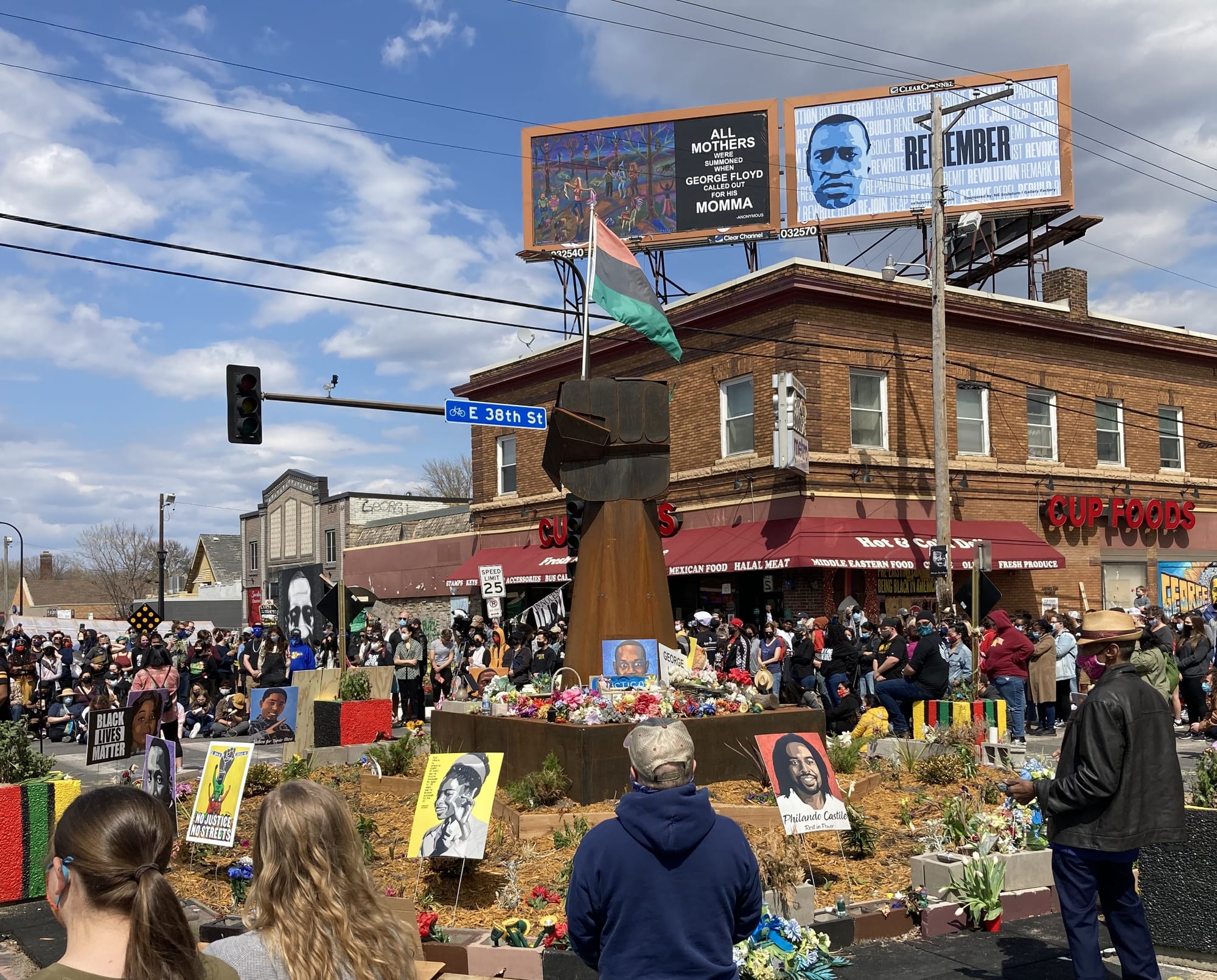
Rule # 3: Assume that everything you do and everything you say is being recorded and act accordingly. And if you do have something to say, say it with your whole chest.
It’s tempting to dwell on the pervasiveness of surveillance in both everyday life and its naked intensity within GFS, as in other spaces where people re-assert their agency against systems of oppression. There was no lack of that, in either law enforcement surveillance or the thousands of cell phones documenting the Square. I’d rather focus on the implied commitment of the second sentence to cultivate and honor the authentic communication of values, desires, hurts, and needs within the community.
The issues facing the Square are emotionally charged, and residents work through these issues together to the best of their abilities. Conversations I witnessed or participated in were sometimes tense and uncomfortable affairs, but we sat, listened, and by and large learned and evolved through the experiences. Radical critique pervaded meetings and continued on sidewalks after. Ultimately, there was a conscious effort to create an honest and accountable, ground-level civic discourse responsive to human need.
Rule #4: Assume that not everyone around you shares your idea of liberation and act accordingly – there are ops everywhere.
The second time I heard gunshots near the Square was on the morning of May 25, 2021, one year to the day after George Floyd’s murder. A public day of commemoration was planned, and international media and their security details were again in the square in anticipation of the event. Shots were fired a ways down an alley to the east of where preparations were taking place and morning broadcasts were going live. The community was far more spooked by this shooting than the first one, and the Square shut down as law enforcement arrived to investigate. After 60 minutes, preparations and interviews continued. I don’t know if anyone figured out what exactly happened that morning, but many people I spoke with at the time suspected it was an op aimed at disrupting the day's events.
“Ops” here refers to people acting with bad intent, among them, people working for MPD. Police harassment of the community was constant, especially after hours. One evening I witnessed a slow-speed police “chase” through the square with three patrol cars “pursuing” a civilian vehicle. Community members told me that was a regular occurrence by the police, a ginned-up pursuit of a plain-clothes officer as a flex of their power. Informants and agitators (LE or not) also lurked around the Square. Marcia showed me video of her confronting a middle-age white man after catching him trying to drop boxes of handgun ammunition into a neighborhood garbage can, an example of the destructive actions being taken by outsiders to undermine the community.
In another instance, a young woman who said she had been in the Capitol Hill Autonomous Zone in Seattle was given an intense lecture by community members after she began to spray paint “kill cops” amidst the graffiti already covering the People’s Way pavement. Whether this was a matter of malicious agitation or a poorly thought-through attempt at allyship, the community had to remain vigilant in identifying people who would bring harm to the people who lived there and their goals.
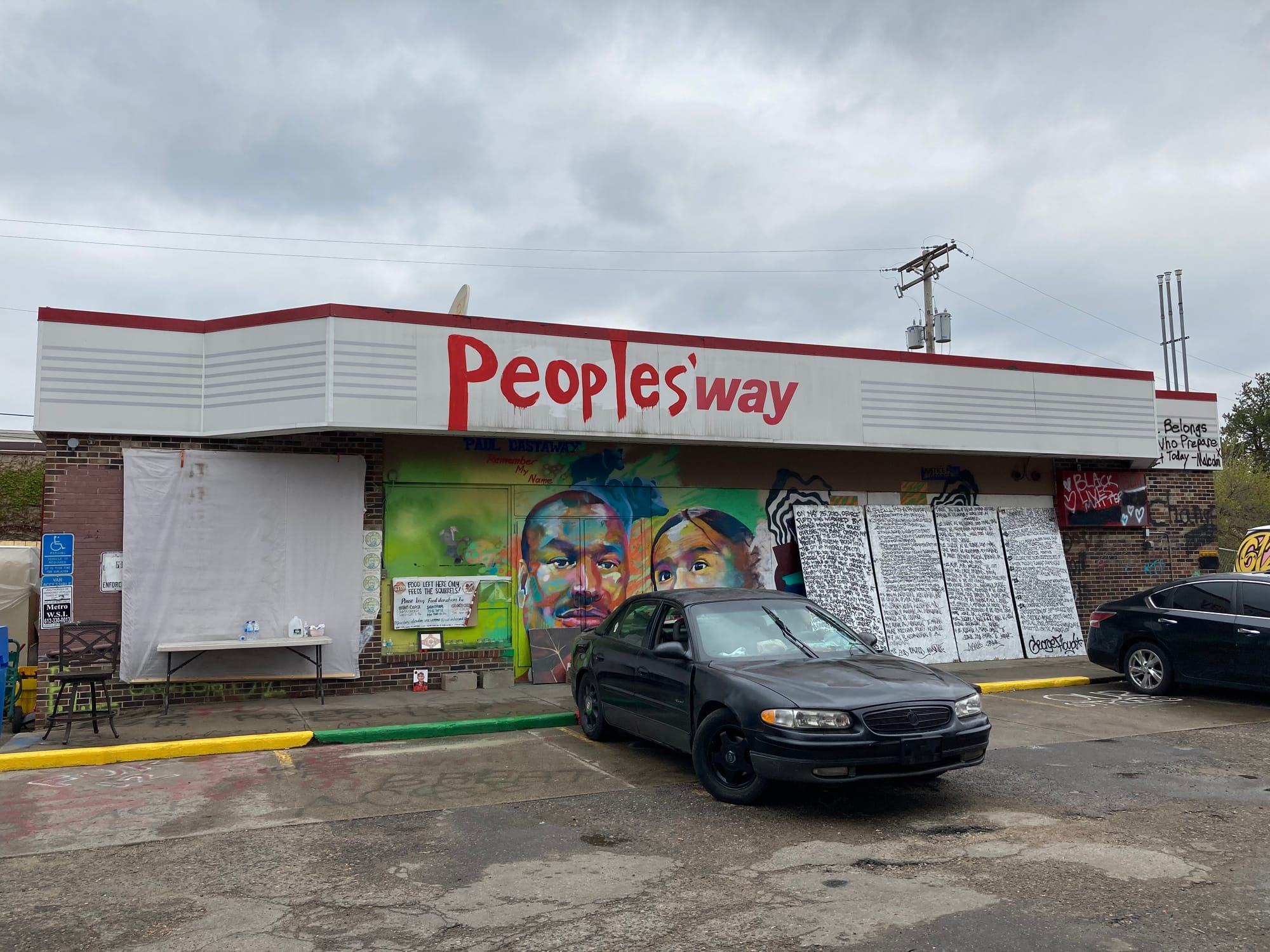
There would sometimes be appended a fifth Rule of George Floyd Square: Assume that everyone here is a little crazy, because you gotta be crazy to take on the state and think you can win.
I struggled with whether I wanted to include this because of how the word “crazy” could be construed as trivializing mental health, but every word of the rule rings true. This is a traumatized community by any measure, whether it be a history of racist over-policing, the immediate shock of a public summary execution, or the on-going toll of protecting and seeking justice for neighbors. Everyone was doing their best to care for each other, but there continue to be unmet needs.
That said, they were winning. Regular progress reports were made on the 24 Demands of the occupation that had emerged through community organizing and were presented to the Minneapolis City Council. A big demand – the trial of the four officers responsible for the murder of George Floyd – was checked off during my time there. The days leading up to the Chauvin verdict involved tense preparations for the arrival of a flood of people, regardless of the outcome; the hours before a nervous watchfulness over a square already full of media, political and civil rights leaders (including my boss), and pilgrims. The moment of, over the din of hundreds of phone notifications, was the most intense outburst of emotions I’ve ever been swept up in: joy, sadness, vindication… and relief. So much fucking relief. Hosting the party was way easier than the alternative, and the joyful, defiant gathering that continued into the night was made possible by a community that was transforming its pain into an expression of resilience, resistance, and beauty.
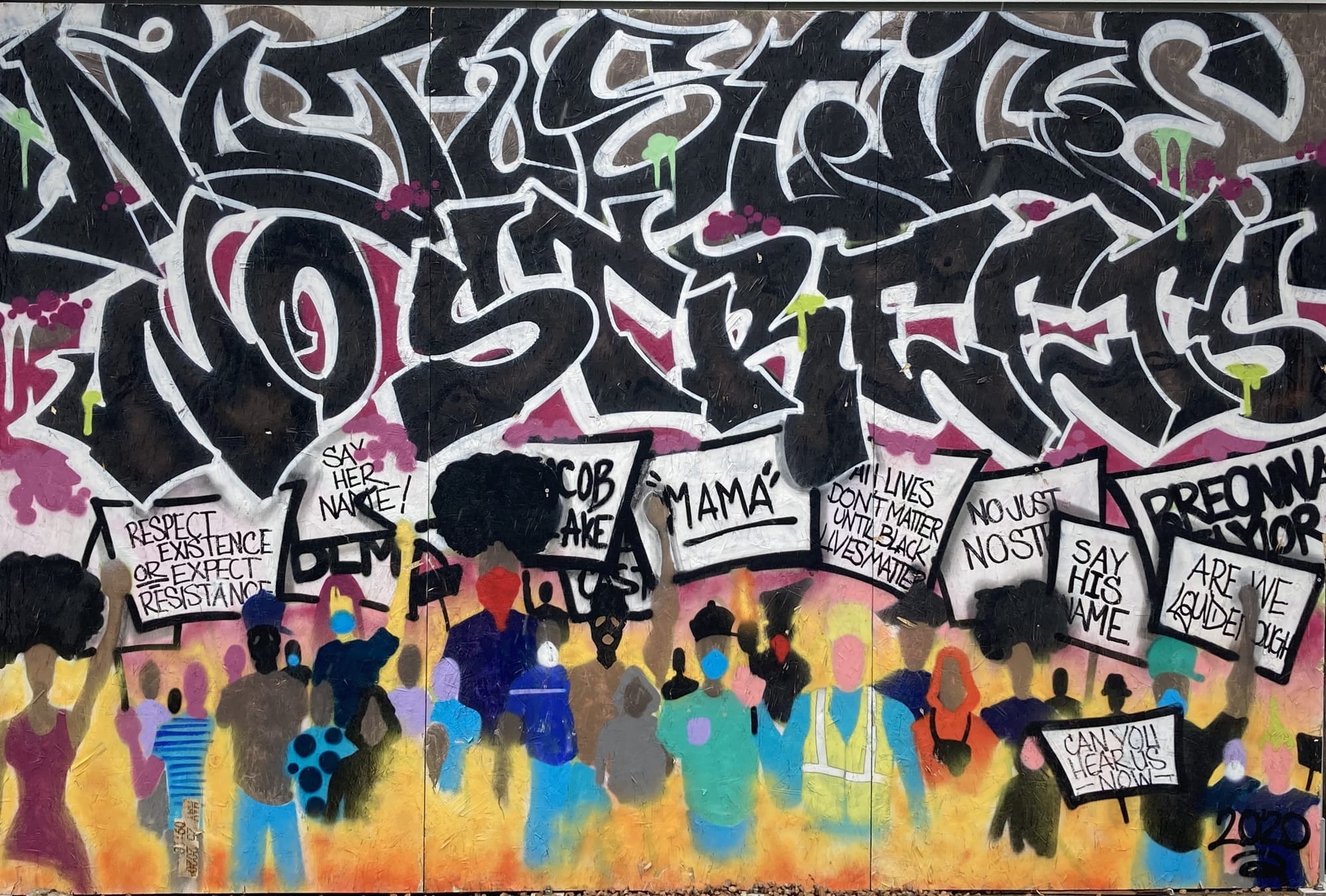
I left the Square everyday exhausted and would arrive back at my hotel to stretch, say hi to loved ones, and conk out. When I would leave Minneapolis for a spell, it would take me a couple days before the tension would leave my body. It required all my presence to sit every day with the grief from within the community and from the people affected by police violence who were drawn there from around the globe. Being trusted as an outsider to care for and protect a neighborhood is both an enormous privilege and a heavy burden.
But every day that I got to go down to the Square, I was exhilarated to arrive and participate in this community. Every day since I left, I’ve thought about how to re-create that sense of presence in my interactions, of mutual care and responsibility in my communities, and of excitement in standing together to build towards a better future, despite the odds.
Bringing this back around to the events of this week, that Renee Good’s murder occurred so close to that of George Floyd’s isn’t incidental. "Assuming everyone’s crazy because you gotta be crazy to fight the state and win" also includes the people drawn to the Square who fear what’s happening inside, be it the Fox News bogeyman of “woke anarchists” or the very real power of the interracial solidarity being practiced (flaws and all) within that community (or in many instances, both). Two thousand hastily trained ICE agents recruited from a pool of men who believe that George Floyd and Renee Good got what they deserved are currently descending on Minneapolis. I fear for the safety of the people in our cities, but especially at this moment for those in South Minneapolis, even as I’m hopeful that the last five years have fostered a strength and vision that will allow them to endure and overcome the darkness of the days ahead.
We must create the solidarity that exists in and around George Floyd Square to resist authoritarianism, and we can’t wait for fascism to overwhelm our neighborhoods before building it if we’re going to get through this. I look forward to sharing more about what we’re doing here in DC when I can, and I hope that you’re all embedded in caring communities.
Given the topic, I’d planned on sharing some Prince as a palate cleanser (we listened to soooooo much Prince in the Square!), but unfortunately, the week had other plans and the news of Bob Weir’s passing dropped while I was composing this. It was very easy to clown on Bobby: his pretty boy aesthetic and short shorts, his questionable choice of guitar tones, and his late career tendency towards playing songs at the tempo of an athlete's resting heart rate. But his songwriting and unparalleled rhythm playing were integral to the sound of the band, and he’s been a worthy bearer of their legacy for the last 30 years. To call him part of the soundtrack of my life is an understatement.
Let's follow the man’s advice and “take a step back” from any sort of responsibility for a few moments to enjoy some Good Ol’ Grateful Dead. Fare thee well Bobby.